Emergency Roof Tarping Chicago IL — Timber Batten Wind Damage Mitigation
Rapid mechanical batten tarping for gale wind shingle blow-off, fallen tree punctures, and low-slope membrane deck exposure across Cook, DuPage, and Lake Counties.
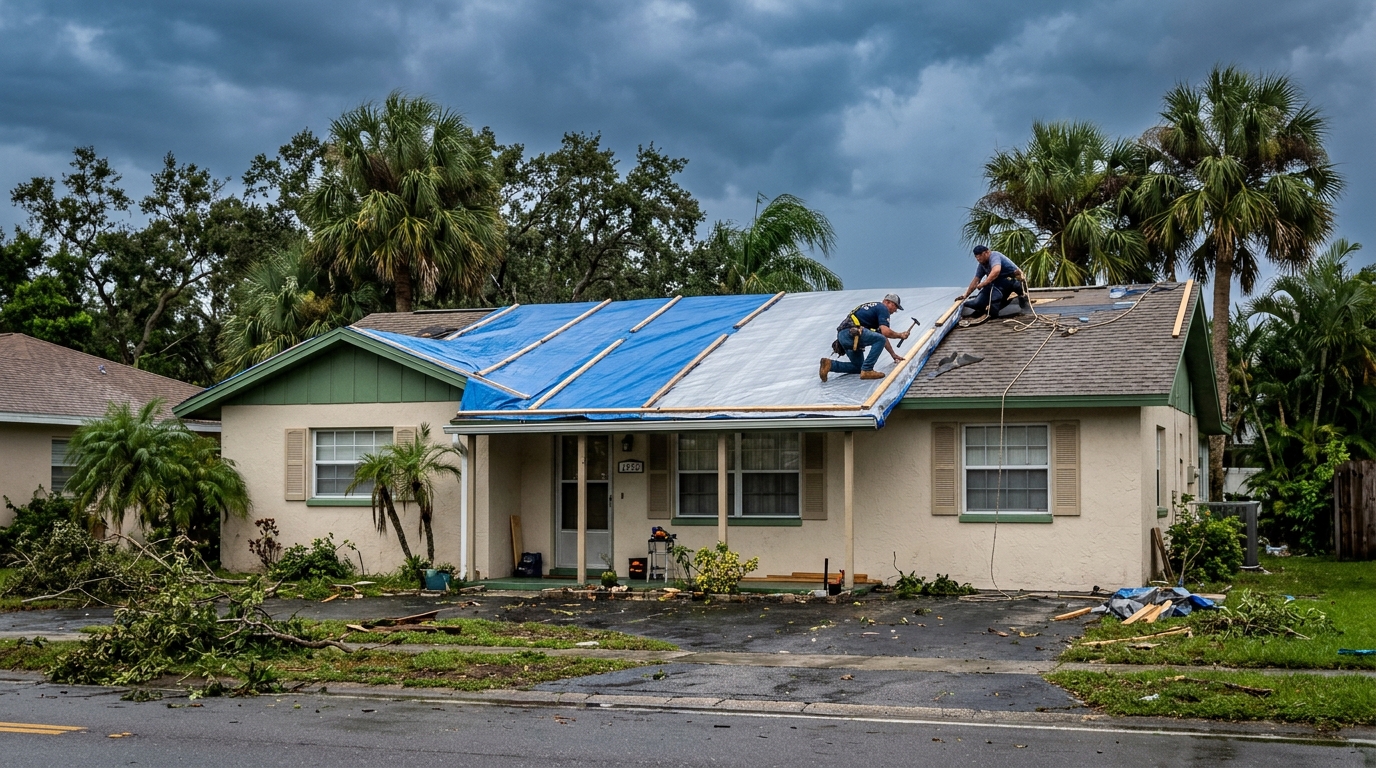
Severe Lake Michigan gales, microburst wind shear, and fallen tree limbs frequently tear wide swaths of asphalt shingles or membrane cap sheets from rooftops across Chicago, Naperville, and Schaumburg. When structural roof decking is exposed to wind-driven rain, professional emergency roof tarping is the critical first line of defense to prevent catastrophic structural flooding and preserve insurance claim coverage. RoofExpertUSA dispatches independent, fully insured Illinois contractors equipped with heavy-duty commercial tarping rigs.
Engineering Specialty: Lake Michigan Gale Shingle Blow-Off & Timber Batten Tarping
Chicago’s moniker “The Windy City” is a meteorological reality during severe autumn nor'easters and spring severe thunderstorm systems. Sustained onshore winds howling off Lake Michigan at 50 to 65+ mph create immense aerodynamic negative pressure (uplift) along windward roof eaves, ridges, and corners. On asphalt shingle roofs, high wind gusts break the thermal sealant bond between shingle tabs, snapping shingles off at the nail line and leaving underlying 15-lb felt and 1/2-inch CDX plywood decking exposed to torrential precipitation.
Standard amateur tarping methods—such as throwing a thin hardware-store blue tarp on the roof and weighting it down with bricks, tires, or sandbags—routinely fail during Chicago windstorms. Sandbags slide down wet slopes, bricks become dangerous windblown projectiles, and wind catches the loose tarp edges, tearing it away within hours. Dispatched commercial crews employ the NRCA-recommended mechanical timber batten method: heavy-duty, cross-laminated 10-mil UV-stabilized woven polyethylene tarps wrapped securely around 2x4 spruce timber battens, fastened directly into roof rafters using structural ceramic-coated screws.
Commercial & Residential Emergency Tarping Standards
10-Mil Heavy-Duty Poly Membranes
Industrial-grade cross-laminated poly tarps resist wind tears up to 75 mph, withstand intense UV degradation, and remain pliable in sub-zero Chicago winter temperatures.
Mechanical 2x4 Timber Batten Anchors
Tarps are wrapped twice around kiln-dried 2x4 spruce lumber and secured directly to roof framing with 3-inch exterior structural screws, preventing edge wind lift and surface fluttering.
Full Ridge-Over-Top Coverage
On pitched roofs, tarps are extended completely over the peak ridge cap and battened on the leeward roof slope to ensure driving rain cannot blow beneath the top edge of the temporary cover.
Insurance Photo Packets Included
Technicians document the full extent of decking damage, shingle blow-off square footage, and completed batten installation with timestamped digital photos for your property insurance adjuster.
Why Insurance Policies Mandate Immediate Roof Tarping
Every standard Illinois homeowner and commercial property insurance policy contains an explicit “Duty to Mitigate” clause. This legal clause requires property owners to take all reasonable emergency steps to prevent further secondary water damage once a storm causes roof failure. If a property owner fails to have an exposed roof professionally tarped and subsequent rain destroys hardwood floors, drywall ceilings, or inventory, the insurance carrier may deny coverage for all resulting interior water destruction. Dispatched emergency tarping fulfills your mandatory policy obligations completely.
Frequently Asked Questions
How long can a professional timber batten tarp remain on my Chicago roof? +
Commercial 10-mil woven poly tarps anchored with mechanical 2x4 timber battens are engineered to protect your structure securely for 60 to 90+ days while permanent insurance estimates and roofing replacement permits are finalized.
Will emergency roof tarping be covered by my property insurance? +
Yes. Emergency tarping is classified as mandatory emergency mitigation under standard property insurance policies. Contractors provide detailed line-item invoicing and photographic proof for insurance reimbursement.
Can you tarp a flat roof on a commercial building or Chicago 2-flat? +
Yes. Crews utilize perimeter weighted timber ballast framing, parapet wall anchors, and cold adhesive edge bonds designed specifically for low-slope commercial and multifamily buildings.